

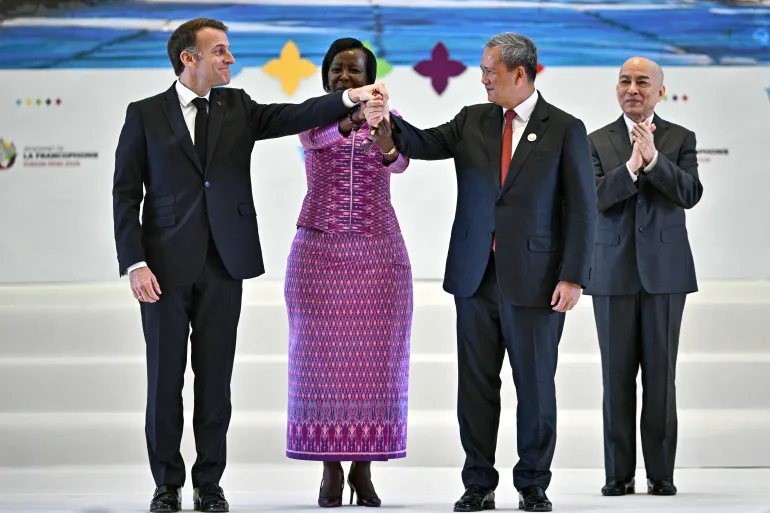
Heads of State and Government of the member countries of the International Organization of La Francophonie (OIF) have decided to postpone the election of the organization's Secretary-General by one year after failing to agree on a single candidate.
The decision was taken during the Heads of State Summit currently underway in Phnom Penh, Cambodia, where participants failed to reach a consensus on who should lead the organization in the coming years.
Under the new arrangement, the election, which had been scheduled for November 16, 2026, has been postponed for 12 months.
During this period, Rwandan Louise Mushikiwabo, who has served as OIF Secretary-General since 2018, will remain at the helm of the organization.
Reports also indicate that, as part of the agreement reached, Rwanda will not field a candidate in the election to be held after the 12-month postponement.
The decision temporarily brings an end to the intense debate that had been ongoing between Kinshasa, Kigali and Paris over the leadership of the OIF.
The Democratic Republic of Congo had backed Juliana Amato Lumumba but, on November 14, announced her withdrawal from the race in a bid to reach a consensus. It also said it would support former Romanian Prime Minister Dacian Cioloș.
On the other hand, Rwanda had refused to withdraw Louise Mushikiwabo from the race, despite calls from France, which feared that Kinshasa could withdraw from the organisation if Mushikiwabo won the election.
Rwanda’s Minister of Foreign Affairs and International Cooperation, Olivier Nduhungirehe, had stated that Rwanda would not withdraw Mushikiwabo from the race, emphasising that OIF rules provide for member states to either agree on a candidate or proceed to an election if consensus cannot be reached.
The new OIF regulations, adopted in 2022, stipulate that consensus is the primary method of selecting the Secretary-General. If consensus cannot be reached, a secret ballot is held, with the candidate receiving the highest number of votes declared the winner. The 53 OIF full member states are entitled to vote.
Ahead of the summit, AFP reported that the proposal to postpone the election had emerged during discussions among member states, although such a move was not provided for under the OIF's electoral rules.
Mushikiwabo will therefore continue leading the OIF during the one-year extension, as member states seek to find a candidate acceptable to all ahead of the new election.
The latest decision could also ease, at least temporarily, the diplomatic tensions between Kigali, Paris and Kinshasa that had surrounded the election.